Pablo Picasso, 1881 - 1973
Madame Canals, Benedetta Bianco. Paris, 1905
Oil and charcoal on canvas.
90 x 70 cm
Museu Picasso, Barcelona
Once he had settled down definitively in Paris in 1904, Picasso got back in touch with several of his old friends from Barcelona. Without doubt, it was the ties to Ricard Canals which were strengthened the more in these new circumstances, and the portrait of Benedetta Bianco, the sentimental partner of Canals, testifies to that. At the Bateau Lavoir the two couples – Picasso and Fernande, and Canals and Benedetta – established a very close friendship: according to Fernande, Picasso would spend the days in the studio of Canals and Benedetta would make use of her culinary skills to feed everyone when the economic resources were scarce. More on Madame Canals
Pablo Ruiz y Picasso, also known as Pablo Picasso (25 October 1881 – 8 April 1973), was a Spanish painter, sculptor, printmaker, ceramicist, stage designer, poet and playwright who spent most of his adult life in France. Regarded as one of the greatest and most influential artists of the 20th century, he is known for co-founding the Cubist movement, the invention of constructed sculpture, the co-invention of collage, and for the wide variety of styles that he helped develop and explore. One of his most famous works are the proto-Cubist Les Demoiselles d'Avignon (1907).
Picasso demonstrated extraordinary artistic talent in his early years, painting in a naturalistic manner through his childhood and adolescence. During the first decade of the 20th century, his style changed as he experimented with different theories, techniques, and ideas. His work is often categorized into periods. While the names of many of his later periods are debated, the most commonly accepted periods in his work are the Blue Period (1901–1904), the Rose Period (1904–1906), the African-influenced Period (1907–1909), Analytic Cubism (1909–1912), and Synthetic Cubism (1912–1919), also referred to as the Crystal period.
Exceptionally prolific throughout the course of his long life, Picasso achieved universal renown and immense fortune for his revolutionary artistic accomplishments, and became one of the best-known figures in 20th-century art.
More on Pablo Picasso
Ricardo Canals y Llambi
A Balcony At The Bullfight, 1904
Oil on canvas
157.00 x 256.30 cm
Private collection
Painted in 1904 while Canals was living and working in a studio at the Bateau Lavoir in Montmartre, this animated painting shows a wonderfully elegant array of ladies dressed up for the great social occasion of the bullfight, in manola dress with their black and white mantillas. As part of a typical artistic device, used by Renoir, Manet, and Goya before them, the spectators become the spectacle, The bull ring offered a wonderful opportunity for the audience - especially the ladies - to show off their finery, and became almost as much an occasion for observing one another as it was to follow the performance. More on Balcony At The Bullfight
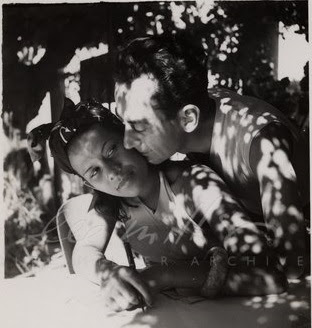
The two central ladies leaning on the balustrade were Fernande Olivier and Benedetta ('Bianco') Coletti. Fernande was muse and model to the Catalan painter Joaquín Sunyer, but she famously left him for Picasso when the latter arrived at the Bateau Lavoir in 1904. The Italian-born Benedetta became Canal's lover and later his wife. At the beginning of her relationship with Picasso, Fernande was living with Canals and Bianco, and the pose of the central figures in the present work is clearly borrowed directly from a 1904 photograph of the two in Canals’ studio. More on this painting
Ricard Canals i Llambí (13 December 1876, Barcelona - 7 February 1931, Barcelona) was a Catalan Impressionist painter, illustrator and engraver; initially associated with the short-lived "Saffron Group".
He began his studies in 1893 at the Escola de la Llotja, but stayed only a short time before leaving to travel with friends. He ended up in Paris with Nonell, where he held a successful showing at "Le Barc de Boutteville", a gallery devoted to young artists. This enabled him to obtain Paul Durand-Ruel as an agent and exhibit throughout Europe and the United States.
Although many of his Parisian paintings were in Spanish costumbrista style, to appeal to his French clients, during this time he came under the influence of Renoir and Degas. He also continued a friendship with Picasso, whom he had met in Barcelona. In 1905, Picasso painted a portrait of the model, Benedetta Bianco (above), who would later become Canals' wife. The year before, Canals had painted "A Box at the Bullfight", which portrayed Bianco and Picasso's future partner, Fernande Olivier (this painting).
He returned to Barcelona in 1907. Three years later, he was named Chairman of the painting section of the newly founded association, "Les Arts i els Artistes". He remained a member until his death. The organization disbanded in 1936. During this time, he made long stays in Madrid, Seville and Granada, painting a wide variety of subjects, although he is especially remembered for his portraits. More on Canals
Venetian School, 18th/19th century
Ladies
Oil on panel
6-1/2''h, 5''w
Private collection
Venetian school (art). From the later part of the 15th century, Venice had a distinctive, thriving and influential art scene. Beginning with the work of Giorgione (c. 1477–1510), and the workshop of Giovanni Bellini (c. 1430–1516), major artists of the Venetian school included Titian (1489–1576), Tintoretto (1518–1594), Veronese (1528–1588) and the Bassano (1510–1592). Considered to bring a primacy of color over line, this tradition was seen to contrast with the Mannerism then prevalent in the rest of Italy, and the Venetian style is viewed as having had a great influence on the subsequent development of painting. More on Venetian school
Ignacio Zuloaga, 1870 - 1945, SPANISH
LA OTERITO (Eulalia Franco), c. 1936
Oil on canvas
176 by 120.5cm., 69¼ by 47½in.
Private collection
Zuloaga's depiction of the dancer Eulalia Franco - familiarly called La Bella Oterito - sitting in her dressing room is one of the most sexually suggestive portraits that he ever painted.
But for wearing a bullfighter's short cropped chaquetilla, a bouquet of flowers in her hair, and a pair of red satin high-healed shoes on her feet, Eulalia sits proudly naked at her dressing table as she turns to look teasingly at the viewer. Her supremely elegant and confident pose - the product of a colourful career on stage - belies any notion of her own sense of déshabillé. The velvet curtain pulled back to the left of the composition simultaneously alludes to the artist's debt to the Spanish Baroque, indicates Eulalia’s profession, and - peep-show-like in intent - allows the viewer the opportunity to glory in her titillating state of undress.
Eulalia Franco's diminutive appellation ‘La Oterito’ is derived from comparisons made of her to another leading dancer of the day Carolina 'la belle' Otero (1868-1965), who made her stage reputation in Paris in the role of an Andalusian gypsy and as a star at Les Folies Bergère. Eulalia likewise specialised in performing Spanish dances and songs, and in her free interpretation and exuberant delivery she not only made the most of her curvaceous form, but was widely viewed as technically more accomplished than her namesake. Although she attracted considerable attention within Spain, her reputation was made in performances abroad, where she garnered a huge following as the star attraction in shows across Europe, the USA and South America. More on Eulalia Franco
Ignacio Zuloaga, in full Ignacio Zuloaga y Zabaleta (born July 26, 1870, Eibar, near Bilbao, Spain—died Oct. 31, 1945, Madrid) Spanish genre and portrait painter noted for his theatrical paintings of figures from Spanish culture and folklore.
The son of a successful metalworker, Zuloaga was a largely self-taught artist who learned to paint by copying Old Masters in the Prado Museum in Madrid. Beginning about 1890, he split his time between Paris and Spain. In Paris he became acquainted with the artists Paul Gauguin, Edgar Degas, and Auguste Rodin. Despite his contact with these prominent French artists, however, his main influences were the Spanish masters El Greco, Diego Velázquez, and Francisco de Goya.
Inspired by a visit to the Andalusia region of Spain in 1892, Zuloaga began to focus on subject matter from Spanish culture and folklore, such as bullfighters, peasants, and dancers. He used earthen colours almost exclusively and often placed his figures against dramatic landscapes. Zuloaga began to achieve international success with the painting Daniel Zuloaga and His Daughters, which was exhibited in 1899 and purchased by the French government for the Luxembourg Museum in Paris. About 1907 he became a popular society portraitist, an aspect of his career that brought him considerable wealth.
After spending much of his career working in Paris, Zuloaga settled permanently in Spain in 1924. His paintings were exhibited in a highly successful one-man show in New York City in 1925. He was awarded the grand prize for painting at the Venice Biennale in 1938. More on Ignacio Zuloaga
British School, 19th century
Portrait of a lady
Oil on canvas
30-1/4''h, 25-1/4''w.
Private collection
In the 18th century, English painting finally developed a distinct style and tradition again. Sir James Thornhill's paintings were executed in the Baroque style of the European Continent and William Hogarth reflected the new English middle-class temperament — English in habits, disposition, and temperament, as well as by birth. His satirical works, full of black humour, point out to contemporary society the deformities, weaknesses and vices of London life.
Portraits were, as elsewhere in Europe, most easy and most profitable way for an artist to make a living, and the English tradition continued to draw of the relaxed elegance of the portrait style developed in England by Van Dyck. By the end of the century, the English swagger portrait was much admired abroad, and had largely ceased to look for inspiration abroad.
The early 19th century also saw the emergence of the Norwich school of painters. Influenced by Dutch landscape painting and the landscape of Norfolk. It was short-lived due to sparse patronage and internal faction prominent members.
The Pre-Raphaelite Brotherhood movement, established in the 1840s, dominated English art in the second half of the 19th century. Its members concentrated on religious, literary, and genre works executed in a colorful and minutely detailed almost photographic style. More on British School, 18th & 19th century
Auguste Toulmouche, (French 1829-1890)
"Le Billet" 1883
Oil on Canvas Size
66 x 45 cm
Museum of Fine Arts, Nantes, France
Auguste Toulmouche (September 21, 1829 – October 16, 1890) was a French painter who painted in the academic realism style. He studied design with a local sculptor and painting with a local portraitist. In 1846, he moved to Paris. There he entered the studio of Swiss artist Charles Gleyre and, by 1848, was ready to make his Salon debut. He was only nineteen years old. He won a third class medal in 1852 and a second class medal in 1861. In 1870, he was awarded the Legion of Honour.
Toulmouche is best known for his depictions of richly clad women set against the backdrop of luxurious interiors. His paintings have been called “elegant trifles” and the ladies who feature in them have been referred to as “Toulmouche’s delicious dolls.” One critic even compared the interiors of a Toulmouche painting to daintily decorated jewel boxes.
In 1862, Toulmouche married a cousin of Claude Monet. This alliance led to his being asked to mentor the young Monet.
Auguste Toulmouche died in Paris on October 16, 1890. Those paintings of his that are not now in private collections can be found hanging in some of the finest museums in the world. More Auguste Toulmouche
Julius LeBlanc Stewart, 1855 - 1919
Portrait of Marie Renard
Oil on panel
9 1/2 by 6 inches (24.1 by 15.2 cm)
Private collection
Marie Renard (8 January 1864 – 19 October 1939) was an Austrian operatic mezzo-soprano, later soprano. Born Marie Pölzl, she first studied voice in her native city of Graz and later in Berlin. She debuted in 1882 in Graz as Azucena in Verdi's Il trovatore, filling in for another singer, and was engaged there until 1884. The following season (1884–1885) she sang at the German Theatre in Prague. After making guest appearances in the title roles at the Berlin Hofoper in 1885, she became a member of that company from 1885 to 1888 and sang there in the premiere of Heinrich Hofmann's Donna Diana on 15 November 1886.
In 1888 she was engaged by the Vienna Hofoper. She reached the peak of her career and popularity with that company. She was prized above all for her portrayals of roles in French operas (sung in German), in particular as Carmen. One of her most memorable performances was as Charlotte in the world premiere of Massenet's Werther.
After her retirement she married Count Rudolf Kinsky. She died in her native city of Graz. More on Marie Renard
Julius LeBlanc Stewart (September 6, 1855, Philadelphia, Pennsylvania — January 5, 1919, Paris, France), was an American artist who spent his career in Paris. A contemporary of fellow expatriate painter John Singer Sargent.
His father, the sugar millionaire William Hood Stewart, moved the family from Philadelphia, Pennsylvania to Paris in 1865, and became a distinguished art collector. Julius studied under Eduardo Zamacois andJean-Léon Gérôme at the École des Beaux-Arts, and later was a pupil of Raymondo de Madrazo.
Stewart's family wealth enabled him to live a lush expatriate life and paint what he pleased, often large-scaled group portraits. He exhibited regularly at the Paris Salon from 1878 into the early 20th century, and helped organize the "Americans in Paris" section of the 1894 Salon. The Baptism, which reportedly depicts a gathering of the Vanderbilt family, was shown at the 1893 Chicago World's Columbian Exposition, and received acclaim at the 1895 Berlin International Exposition (below).
Julius LeBlanc Stewart (1855–1919)
The Baptism, c. 1892
Oil on canvas
201.3 × 297.5 cm (79.3 × 117.1 in)
Los Angeles County Museum of Art
He painted a series of sailing pictures. The most accomplished of these, Venice, showed a sailing party on deck and included a portrait of the actress Lillie Langtry. Another, Yachting on the Mediterranean, set a record price for the artist, selling in 2005 for US$2.3 million.[2]
Late in life, he turned to religious subjects, but Stewart is best remembered for his Belle Époque society portraits and sensuous nudes. More on Julius LeBlanc Stewart
Natalia Baykalova, April 7, 1985 Krasnoyarsk, Russia
Hakama №1
Oil on canvas
36.2 H x 49.2 W x 1.2 in
Hakama are a type of traditional Japanese clothing. Trousers were used by the Chinese imperial court in the Sui and Tang dynasties, and this style was adopted by the Japanese in the form of hakama beginning in the sixth century. Hakama are tied at the waist and fall approximately to the ankles. They are worn over a kimono (hakamashita). More on Hakama
Natalia Baykalova, April 7, 1985 Krasnoyarsk, Russia
Hakama №2
Oil on canvas
50 x 70 x 2 cm
Natalia Baykalova was born on April, 7th, 1985 in Krasnoyarsk, Russia. Her mother Tatiana noticed her artistic talent and encouraged her to persue her ambition. At the age of 10 years Natalia started to attending classes in an art studio, then progressed to he most higher art school of Surikova. At the age of 15 Natalia joined the Art College of Surikova, well known for their classical traditions.
Natalia begins her career working as a designer, illustrator, and then as an Art Director in City Format Magazine. At the magazine she has begun to work as a photographer. This new work helped Natalia to define further visions and directions for her paintings. During those same years she created her own style of painting. Painting has become her first priority. All her life experiences and education are mixed together to deliver a very talented and experienced paintings to the world. "In paintings I reflect my knowledge, emotions, myself and the world". More on Natalia Baykalova
Images are copyright of their respective owners, assignees or others
We do not sell art prints, framed posters or reproductions. Ads are shown only to compensate the hosting expenses.
If you enjoyed this post, please share with friends and family.



.jpg)


