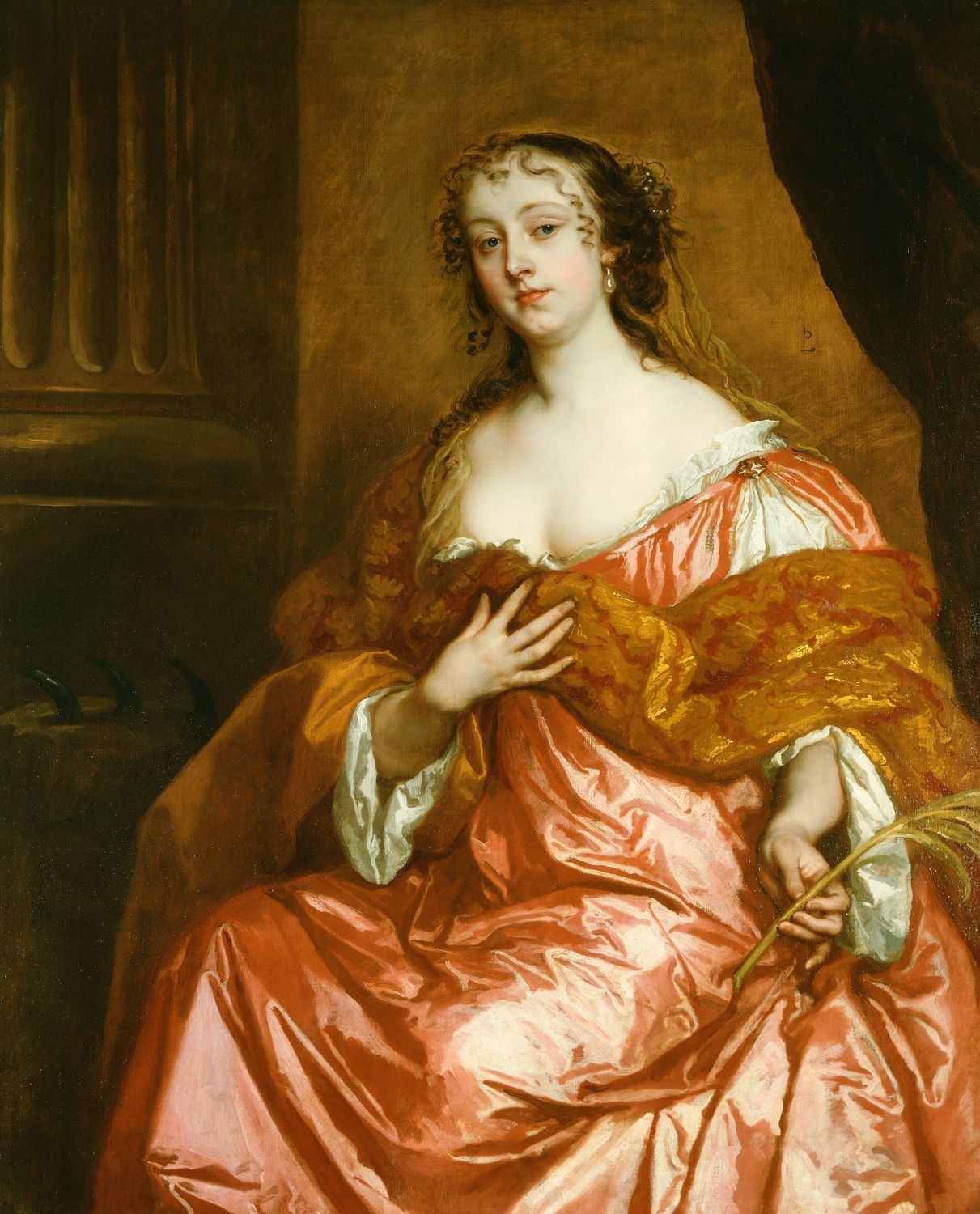
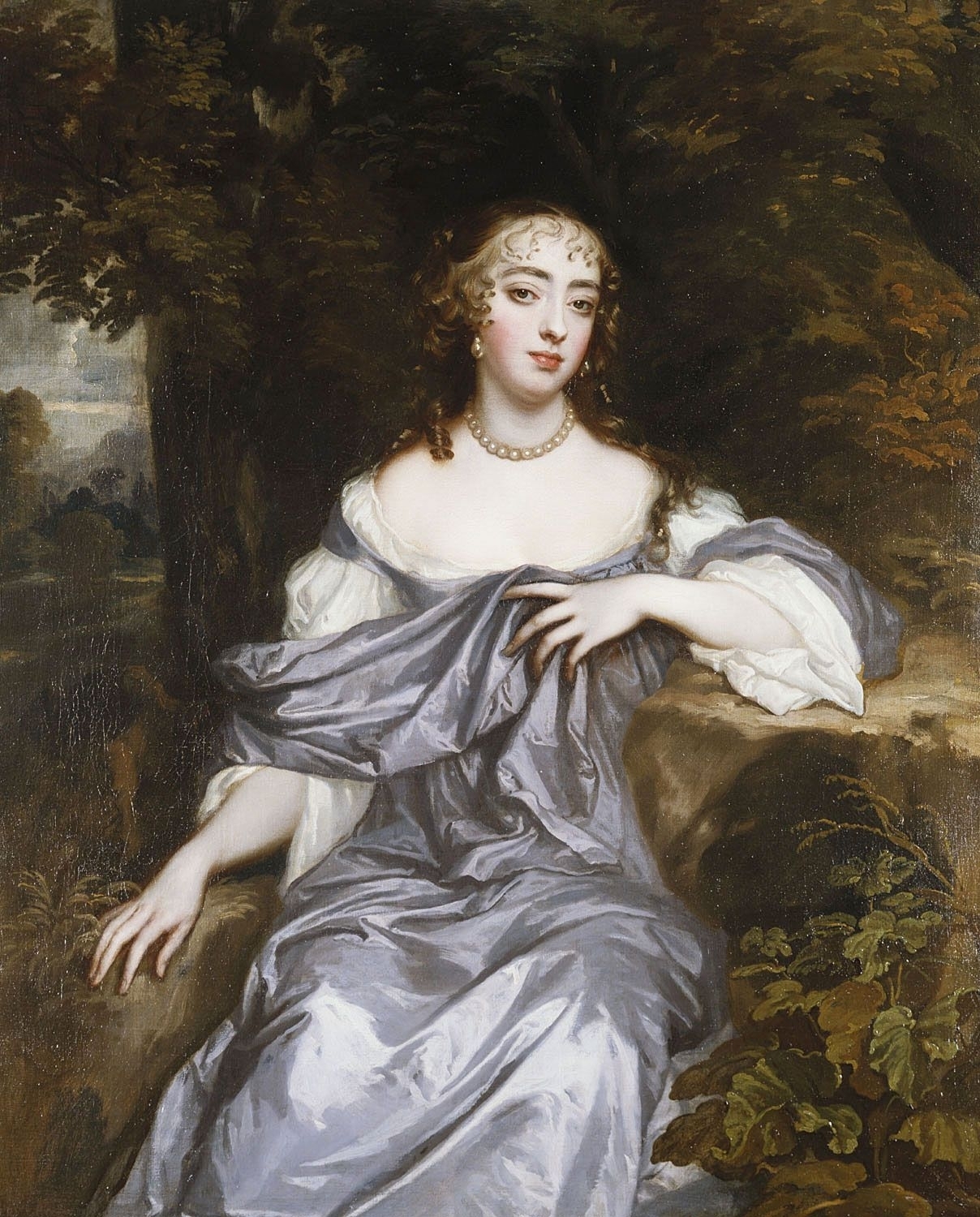
Showing posts with label Peter Lely. Show all posts

Sunday, January 21, 2018

04 Paintings, PORTRAIT OF A LADY, of the 18th & 19th C., with Footnotes. #19

Jean-Joseph Benjamin Constant, French, 1845-1902 
Lady with a Jewel Box (Prima Donna Marguerite in "Jewel Song" of Gounod's 'Faust' 
Oil on canvas 
38 3/4 x 24 1/4 inches (98.5 x 61.5 cm)
Private collection

Marguerite Bériza (1880 – 1970) was a French opera singer who had an active international career during the first half of the 20th century. She began her career as a mezzo-soprano at the Opéra-Comique in 1900; ultimately transitioning into the leading soprano repertoire at that theatre in 1912. She performed extensively in the United States from 1914–1917,  in the French provinces, Monaco, Portugal, and Switzerland. In 1924 she founded her own opera company in Paris with whom she actively performed up until 1930. More on Marguerite Bériza 

Jean-Joseph Benjamin-Constant, born Jean-Joseph Constant (10 June 1845 – 26 May 1902), was a French painter and etcher best known for his Oriental subjects and portraits. He was born in Paris and studied at the Ecole des Beaux-Arts in Toulouse. A journey to Morocco in 1872 strongly influenced his early artistic development and lead him to produce Romantic scenes under the spell of Orientalism. He received a medal in 1876.

After 1880, he changed his manner, devoting himself to mural decorations. He was distinguished as a portrait painter, especially in England, where he was a favorite of the aristocracy. His portrait Mons fils André (Luxembourg) was awarded a medal of honor at the Salon in 1896.

He was made a member of the Institute in 1893, and was a commander of the Legion of Honor. He visited the United States several times, and painted a number of portraits. The Metropolitan Museum of Art in New York owns a large mural decoration by Benjamin-Constant entitled Justinian in Council.

He also was a writer of repute, contributing a number of studies on contemporary French painters. He died in Paris on 26 May 1902. More on Jean-Joseph Benjamin-Constant

Salvador Dali, Spanish, 1904-1989
 Portrait of Ruth Lachman, c. 1961
Oil on canvas 
36 x 24 3/4 inches (91.5 x 62.9 cm)
Private collection

Enigmatic and elusive, this painting embodies the genre-bending portraiture of Dalí's mature oeuvre. He portrays here the collector and society figure of New York City, Ruch Lachman. Her gaze at the viewer is at once inquisitive and assured, suggesting a narrative that is not fully formed. Dalí incorporates into the background a series of figures unique to his Surrealist canon - a figure on horseback and attenuated angel. The desert landscape recedes into the distance to meet with a dramatic mountain range. The unorthodox dialogue between the central figure, seemingly at rest in an interior, and the expansive dreamscape.  More on this painting

Salvador Domingo Felipe Jacinto Dalí i Domènech, Marqués de Dalí de Púbol (11 May 1904 – 23 January 1989), known professionally as Salvador Dalí, was a prominent Spanish surrealist painter born in Figueres, Catalonia, Spain.

Dalí was a skilled draftsman, best known for the striking and bizarre images in his surrealist work. His painterly skills are often attributed to the influence of Renaissance masters. His best-known work, The Persistence of Memory, was completed in August 1931. Dalí's expansive artistic repertoire included film, sculpture, and photography, in collaboration with a range of artists in a variety of media.

Dalí attributed his "love of everything that is gilded and excessive, my passion for luxury and my love of oriental clothes" to an "Arab lineage", claiming that his ancestors were descended from the Moors.

Dalí was highly imaginative, and also enjoyed indulging in unusual and grandiose behavior. His eccentric manner and attention-grabbing public actions sometimes drew more attention than his artwork, to the dismay of those who held his work in high esteem, and to the irritation of his critics. More Salvador Dalí

Attributed to Sir Peter Lely and Studio, SOEST 1618 - 1680 LONDON
PORTRAIT OF ELIZABETH TRENTHAM, VISCOUNTESS CULLEN, AS VENUS
Oil on canvas
129 by 196cm., 50¾ by 77¼ in.
Private collection

Full length, nude, recumbent on a divan, drawing back a curtain to reveal a balustrade with a pair of doves, a villa and landscape beyond.

Elizabeth Trentham, Viscountess Cullen (1640-1713) was Lady of the Bedchamber to Queen Catherine and a celebrated Restoration Court beauty of equivocal reputation – notorious for her physical charm, her extravagance and her immorality. The daughter of Sir Francis Trentham of Rocester Priory, in Staffordshire, and wife of Brian Cokayne, 2nd Viscount Cullen (1631-1687), she was a considerable heiress, inheriting not only the Trentham family estates in Staffordshire but also those of the de Vere family, Earls of Oxford, at Castle Hedingham in Essex, which provided her with an independent income of £6,000 a year. Such was her extravagance, however, that she ran through it all. The very fact that she was prepared to have herself painted entirely naked, in quite such a provocative and alluring manner, is a strong indication of her character. More on Elizabeth Trentham

Lely painted another, more conventional portrait of Lady Cullen (below). Conceived very much in the manner of his Windsor and Althorp series, three-quarter length, wearing a yellow satin dress, the number of versions after that picture underscores her reputation as a ‘Beauty’ and indicate the prominence of her contemporary fame. More on this painting

Sir Peter Lely (Soest 1618 – London 1680)
Elizabeth Trentham, Viscountess Cullen (1640-1713), circa 1660 - 1665
1270 x 1029 mm (50 x 40 1/2 in)
National Trust Collections

Peter Lely, Dutch, British, English (Born Soest, Westphalia, 14 September 1618; died London, 30 November 1680). Painter of Dutch origin who spent almost all his career in England and was naturalized in 1662. His family name was originally van der Faes, and the name Lely is said to have come from a lily carved on the house in The Hague where his father was born. Lely was born in Germany and trained in Haarlem.

He moved to England in the early 1640s, and although he first painted figure compositions in landscapes (Sleeping Nymphs, c.1650, Dulwich Picture Gal., London), he soon turned to the more profitable field of portraiture. 


Fortune shone on him, for within a few years of his arrival the best portraitists in England disappeared from the scene: van Dyck and William Dobson died in 1641 and 1646 respectively, and Cornelius Johnson returned to Holland in 1643. In 1654 he was described as ‘the best artist in England’. Lely portrayed Charles I and his children, Oliver Cromwell and his son Richard, and other leading figures of the Interregnum. With the aid of a team of assistants he maintained an enormous output, and his fleshy, sleepy beauties clad in exquisite silks and his bewigged courtiers have created the popular image of Restoration England. More on Peter Lely


Images are copyright of their respective owners, assignees or others

We do not sell art, art prints, framed posters or reproductions. Ads are shown only to compensate the hosting expenses.

If you enjoyed this post, please share with friends and family.


Saturday, March 25, 2017

11 Paintings, PORTRAIT OF A LADY, with Footnotes. # 16

Corneille de La Haye dit de Lyon and his workshop
LA HAYE 1500/1510 - 1575 LYON
PORTRAIT OF MADAME ANNE DE PISSELEU, DUCHESSE D'ETAMPES 
Oil on panel 
17 x 14 cm; 6 3/4 by 5 1/2 in
Private Collection

Anne de Pisseleu d'Heilly, the duchesse d'Etampes. Anne was born in 1508 (making her fourteen years younger than the king) and began her career at court as maid of honor to François's mother, Louise de Savoie. When François returned to France in 1526 from his imprisonment in Spain, he discovered the lovely--and ambitious--Anne and took her as his lover. She became his official mistress and for the next twenty years, until his death in 1547, she wielded significant influence in political and artistic circles at the French court. More Anne de Pisseleu d'Heilly, the duchesse d'Etampes.

Corneille de Lyon or Corneille de la Haye (born between 1500 and 1510 in The Hague and died in 1575 in Lyon ) was a royal painter of Franco - Dutch portraits.

Although he was known at the time as Corneille de la Haye, he knew nothing of his Dutch youth and arrived in Lyons at the latest in 1533 . Painting the portraits of several members of the royal family, he was given the title of royal painter in 1541. Despite this work, he remained in the Rhone town throughout his life. By marrying the daughter of a renowned printer, he became part of the notability of the city, and acquired a solid social position, living in the printers' quarter near Notre-Dame-de-Confort .

He lived by his work as a painter, and cooperated with other artists in the neighborhood. His studio preserves a gallery of copies of the paintings of the most famous personages he has painted. This allows customers to acquire a new copy, or encourages them to have the portrait painted by a renowned painter. His affairs seem to be prosperous until the wars of religion , during which, despite his attachment to the Reformed religion , he did not appear to be the victim of aggression. He converted to the catholic religion in 1569.

The art of Corneille, of small portrait without decoration, was innovative for the time, and gave him great prestige, to the point that the paintings of this style end up being designated as "Corneilles". Working in oil on wood, he focused his work on the face and the bust. Corneille was very precise in the composition of hair and beards. His models rarely wear heavy decorated clothes, his style remained very sober. The background of his paintings is always without decoration and he seems to work without preparatory drawing. More Corneille de Lyon or Corneille de la Haye

Studio of Sir Peter Lely, SOEST 1618 - 1680 LONDON
PORTRAIT OF LADY ESSEX (NÉE RICH) FINCH, LATER COUNTESS OF NOTTINGHAM
Oil on canvas
49 by 39 3/4 in.; 124.5 by 101 cm.
Private Collection

The question of likeness with Lely is always a difficult subject as even his contemporaries commented on the fact that many of his sitters looked similar – 'Mr Walker, ye Painter swore Lilly's Pictures, was all Brothers and Sister'. This sitter bears strong affinities to those in other works which have traditionally been called Nell Gwyn, the longtime mistress of Charles II and among Lely's most famous subjects, with whom many portraits by Lely and his studio have been associated, both correctly and incorrectly. More question of likeness

Lady Essex (Rich) Finch, later Countess of Nottingham, British, 1652 - 1684 was born around 1652, the youngest of three daughters of Robert Rich, 3rd Earl of Warwick, and his second wife, Anne Cheeke Rogers. Her mother died within a few years of her birth, and her father made a death-bed request that she and her sisters be raised by Mary Rich, wife of his brother and heir, Charles Rich, 4th Earl of Warwick. 

Essex and her sisters were raised in a troubled domestic atmosphere, marred by the violent rages of their uncle, who suffered painfully from gout, and the morose, penitential brooding of their aunt, a religious convert who punished herself severely for the frivolous youth she spent among the Killigrew family. 

Co-heirs to their father's fortune, Lady Essex and her sisters inherited additional lands and money on their uncle's death in 1673. Vast wealth made them attractive marriage prospects. When a match was proposed with Daniel Finch, eldest son of Sir Heneage Finch,, Lord Keeper of the Great Seal and later 1st Earl of Nottingham. Finch was a man of stellar character and won Lady Warwick's approbation. Several months later, Essex gave her consent and they were married on June 16, 1674, at Leighs Priory, near Felsted, Essex. The couple resided with the groom's parents in Kensington (now Kensington Palace). Tender letters from her husband and father-in-law reveal that Lady Essex (who suffered from delicate health) was the object of affectionate concern. Her husband served as Secretary of the Navy from 1679 to 1684, and by his father's death on December 18, 1782, he became 2nd Earl of Nottingham. The Countess gave birth to eight children, and adopted the unusual practice of nursing them herself. All but one died in infancy. Essex, Countess of Nottingham, died from complications of childbirth on March 23, 1684, and was buried in the Finch family vault at Ravenstone, Buckinghamshire. Nine months later her husband married eighteen-year-old Anne Hatton (1667-1743), third daughter of Christopher, 1st Viscount Hatton of Gretton. A notable poet, she bore approximately thirty children in forty-four years of marriage. More Lady Essex

Sir Peter Lely (14 September 1618 – 30 November 1680) was a painter of Dutch origin, whose career was nearly all spent in England, where he became the dominant portrait painter to the court.

Lely was born Pieter van der Faes to Dutch parents, his father was an officer serving in the armed forces of the Elector of Brandenburg. Lely studied painting in Haarlem He became a master of the Guild of Saint Luke in Haarlem in 1637. He is reputed to have adopted the surname "Lely" (also occasionally spelled Lilly) from a heraldic lily on the gable of the house where his father was born in The Hague.

He arrived in London in around 1641. His early English paintings, mainly mythological or religious scenes, or portraits set in a pastoral landscape. Lely's portraits were well received, and he succeeded Anthony van Dyck as the most fashionable portrait artist in England. He became a freeman of the Painter-Stainers' Company in 1647 and was portrait artist to Charles I. His talent ensured that his career was not interrupted by Charles's execution, and he served Oliver Cromwell, and Richard Cromwell. 

Peter Lely (1618–1680)
Unknown Woman, (Margaret Hughes ?) circa 1670-75
Oil on canvas
Tate Britain

While the identity of the sitter is uncertain, her bared breast suggests that she is some powerful man's mistress rather than a lady of impeccable virtue. Her left hand rests on a golden object, perhaps the jar that symbolises the reformed biblical sinner Mary Magdalene. Her other hand quietens an attentive spaniel, a breed often identified with the Stuart royal family.The inscription on the ledge, 'Dutchess of Cleveland', was probably added a century later. More on the Unknown Woman

Margaret Hughes (c. 1630 – 1 October 1719), also Peg Hughes or Margaret Hewes, is often credited as the first professional actress on the English stage. Hughes was also famous as the mistress of the English Civil War general and later Restoration admiral, Prince Rupert of the Rhine. More Margaret Hughes

After the English Restoration in 1660, Lely was appointed as Charles II's Principal Painter in Ordinary in 1661, with a stipend of £200 per year, as Van Dyck had enjoyed in the previous Stuart reign. Lely became a naturalised English subject in 1662.

Demand was high, and Lely and his large workshop were prolific. After Lely painted a sitter's head, Lely's pupils would often complete the portrait in one of a series of numbered poses. As a result, Lely is the first English painter who has left "an enormous mass of work", although the quality of studio pieces is variable.  More Sir Peter Lely

MASTER of the Story of Griselda
Artemisia I of Caria, c. 1492
Oil on panel, 88 x 46 cm
Museo Poldi Pezzoli, Milan

This painting, attributed to an anonymous Sienese master referred to as the Master of the Story of Griselda, was probably commissioned on the occasion of a wedding. The figures of this artist are characterized by an elongated body and almost dancing movement. The artist was influenced by Luca Signorelli who worked in Siena in this period. More

The Roman writer Aulus Gellius, narrates that in 351 B. C. the widowed Artemisia removed the ashes of her brother and husband, Mausolus, from his tomb, the Mausoleum at Halicarnassus in Asia Minor (visible behind), mixed the ashes into a potion, and drank it.

Artemisia I of Caria was a Greek queen of the ancient Greek city-state of Halicarnassus and of the nearby island of Kos, within the Achaemenid satrapy of Caria, in about 480 BCE. She fought as an ally of Xerxes I, King of Persia against the independent Greek city states during the second Persian invasion of Greece. She personally commanded her contribution of five ships at the naval battle of Artemisium and in the naval Battle of Salamis in 480 BCE. She is mostly known through the writings of Herodotus, himself a native of Halicarnassus, who praises her courage and the respect in which Xerxes held her. 

The ships she brought had the second best reputation in the whole fleet, next to the ones from Sidon.

During the battle, when Artemisia saw that she was near to falling into the hands of the Greeks, she ordered the Persian colours to be taken down, and the master of the ship to bear down upon and attack a Persian vessel of the Calyndian allies, which was commanded by Damasithymus, that was passing by her.

When the captain of the Athenian ship saw her charge against a Persian ship, he turned his ship away and went after others, supposing that the ship of Artemisia was either a Greek ship or was deserting from the Persians and fighting for the Greeks.

According to Polyaenus, when Xerxes saw her sink the ship, he said: "O Zeus, surely you have formed women out of man's materials, and men out of woman's." More Artemisia I of Caria

Paul Raphael Meltsner, 1905 - 1967
PORTRAIT OF GERTRUDE LAWRENCE
Oil on canvas
38 by 33 inches, (96.5 by 83.8 cm)
Private Collection

Gertrude Lawrence, original name Gertrud Alexandra Dagma Lawrence Klasen (born July 4, 1898, London, Eng.—died Sept. 6, 1952, New York, N.Y., U.S.), English actress noted for her performances in Noël Coward’s sophisticated comedies and in musicals.

Lawrence was the daughter of music hall performers, and from an early age she was trained to follow their career. She made her stage debut in December 1908 in a pantomime Dick Whittington in Brixton. Subsequently she appeared in Babes in the Wood (1910) and other musicals and plays, and for a time she toured in minor revues. In 1916 she began appearing in André Charlot’s intimate revues in London, and two years later she stepped into the lead when Beatrice Lillie fell ill. She appeared with Coward, whom she had known for 10 years, in his London Calling (1923) and in January 1924 made her New York debut as one of the stars of Charlot’s Revue. Lawrence’s greatest role was in Coward’s Private Lives, written with her in mind. Both the play and the stars set the tone that would characterize comedies of manners for a decade or more. Perhaps Lawrence’s greatest triumph was as Liza Elliot in the Moss Hart–Kurt Weill musical Lady in the Dark (1941). Coward called her “star quality.” On the strength of it she remained for a quarter-century one of the most popular stars on the American and British stages. In March 1951 she opened on Broadway in Rodgers and Hammerstein’s The King and I, during the run of which she died. More Gertrude Lawrence

Paul Raphael Meltsner (1905–1966) was an American artist who was widely recognized for his Works Progress Administration (WPA) era paintings and lithographs, and who was later known for his iconic portraits of celebrities in the performing arts.

Paul Meltsner sold his first painting when he was eight years old to the government of Palestine for $25. He was born in New York City and attended public schools in Harlem before graduating Flushing High School in 1922. Meltsner later studied at the National Academy of Design and did illustration work for Coronet and Bachelor magazines. 

Later in his career, Meltsner turned his artistic interests to portraits of celebrities in the performing arts. His portrait of Carmen Miranda, complete with a banana hat, helped to popularize Miranda's image and was acquired by the Brazilian Government for the National Museum of Brazil in Rio de Janeiro. Meltsner would become widely recognized for his depictions of performers in the dramatic arts. One of Meltsner's Graham portraits is housed in the National Portrait Gallery at the Smithsonian Institution in Washington, D.C., another in the Wichita Art Museum in Wichita, Kansas, and another hangs in the National Museum of Argentina in Buenos Aires. More Paul Raphael Meltsner 

Norman Rockwell, 1894 - 1978
PORTRAIT OF PATRICIA MERNONE, c. 1969
Oil on canvas
29 by 27 inches, (73.7 by 68.6 cm)
Private Collection

Patricia Mernone, was one of the great women American sports car drivers of the 1960s. Academically trained as an organic micro-analytical chemist, she became interested in racing in in 1961, when her father took-up the sport.  By 1968, she had competed in at least 28 major races in the United States and placed first or second in at least 12 of them.  Described as slim, petite and feminine, Mernone was an aggressive force to be reckoned with on the track. More Patricia Mernone

Norman Rockwell, 1894 - 1978
STUDY FOR PORTRAIT OF PATRICIA MERNONE, c. 1969
Pencil and charcoal on paper
28 3/4 by 27 inches, (73 by 68.6 cm)
Private Collection

Pat Mernone. Pete's bio notes that Pat was daughter of Ed Mernone who was one of the pioneers in the development of Summit Point Raceway.

Norman Perceval Rockwell (February 3, 1894 – November 8, 1978) was a 20th-century American author, painter and illustrator. His works enjoy a broad popular appeal in the United States for their reflection of American culture. Rockwell is most famous for the cover illustrations of everyday life he created for The Saturday Evening Post magazine over nearly five decades. He also is noted for his 64-year relationship with the Boy Scouts of America, during which he produced covers for their publication Boys' Life, calendars, and other illustrations. More Norman Perceval Rockwell

Edmund Blampied, (British, 1886-1966)
Isabella, c. 1955
Oil on board
19 x 28cm (7 1/2 x 11in).
Private Collection

Edmund Blampied (30 March 1886 – 26 August 1966) was born on a farm in the Parish of Saint Martin, Jersey in the Channel Islands on 30 March 1886. He was was one of the most eminent artists to come from the Channel Islands, yet he received no formal training in art until he was 16 years old. He was noted mostly for his etchings and drypoints published at the height of the print boom in the 1920s during the etching revival, but was also a lithographer, caricaturist, cartoonist, book illustrator and artist in oils, watercolours, silhouettes and bronze. More Edmund Blampied

Raphael (1483–1520)
Portrait of Maddalena Doni Born Strozzi, c. 1506
Oil on panel
63 × 45 cm (24.8 × 17.7 in)
Pitti Palace,  Florence, Italy

Agnolo Doni married Maddalena Strozzi in 1503, but Raphael's portraits were probably executed in 1506, the period in which the painter studied the art of Leonardo da Vinci most closely. The composition of the portraits resembles that of the Mona Lisa: the figures are presented in the same way in respect to the picture plane, and their hands, like those of the Mona Lisa, are placed on top of one another. But the low horizon of the landscape background permits a careful assessment of the human figure by providing a uniform light which defines surfaces and volumes. This relationship between landscape and figure presents a clear contrast to the striking settings of Leonardo, which communicate the threatening presence of nature.

But the most notable characteristic that distinguishes these portraits from those of Leonardo is the overall sense of serenity which even the close attention to the materials of clothes and jewels (which draw one's attention to the couple's wealth) is unable to attenuate. Every element - even those of secondary importance - works together to create a precise balance.

These works, linked not only by the kinship of the subjects, but also by their evident stylistic homogeneity, mark the beginning of Raphael's artistic maturity. More The Portrait of Maddalena Doni

Raffaello Sanzio da Urbino (April 6 or March 28, 1483 – April 6, 1520), known as Raphael, was an Italian painter and architect of the High Renaissance. His work is admired for its clarity of form, ease of composition, and visual achievement of the Neoplatonic ideal of human grandeur. Together with Michelangelo and Leonardo da Vinci, he forms the traditional trinity of great masters of that period.
Raphael was enormously productive, running an unusually large workshop and, despite his death at 37, leaving a large body of work. Many of his works are found in the Vatican Palace. The best known work is The School of Athens in the Vatican Stanza della Segnatura. After his early years in Rome much of his work was executed by his workshop from his drawings, with considerable loss of quality. He was extremely influential in his lifetime, though outside Rome his work was mostly known from his collaborative printmaking. More Raffaello

John William Waterhouse, (1849–1917)
Gather Ye Rosebuds While Ye May, c. 1908
Oil on canvas
61.6 × 45.7 cm (24.3 × 18 in)
Private collection
Gather Ye Rosebuds While Ye May is an oil painting on canvas created in 1908 by British Pre-Raphaelite artist, John William Waterhouse. It was the first of two paintings inspired by the 17th century poem "To the Virgins, to Make Much of Time" by Robert Herrick which begins:
Gather ye rosebuds while ye may,
Old Time is still a-flying;
And this same flower that smiles today
Tomorrow will be dying.

John William Waterhouse (April 6, 1849 – February 10, 1917) was an English painter known for working in the Pre-Raphaelite style. He worked several decades after the breakup of the Pre-Raphaelite Brotherhood, which had seen its heyday in the mid-nineteenth century, leading to his sobriquet "the modern Pre-Raphaelite". Borrowing stylistic influences not only from the earlier Pre-Raphaelites but also from his contemporaries, the Impressionists, his artworks were known for their depictions of women from both ancient Greek mythology and Arthurian legend.
Born in Italy to English parents who were both painters, he later moved to London, where he enrolled in the Royal Academy of Art. He soon began exhibiting at their annual summer exhibitions, focusing on the creation of large canvas works depicting scenes from the daily life and mythology of ancient Greece. Later on in his career he came to embrace the Pre-Raphaelite style of painting despite the fact that it had gone out of fashion in the British art scene several decades before. More


B. Prabha, 1933 - 2001
UNTITLED (FISHER WOMAN), c. 1960
Oil on canvas 
28 x 24 in. (71 x 61 cm.)
Private Collection

B. Prabha (1933–2001) was a major Indian artist who worked mainly in oil, in an instantly recognizable style. She is best known for graceful elongated figures of pensive rural women, with each canvas in a single dominant color. By the time of her death, her work had been shown in over 50 exhibitions, and is in some important collections, including India's National Gallery of Modern Art.

 She was moved by the lives of rural women, and over time, they became the main theme of her work. In an interview with "Youngbuzz India," she said:

Prabha came to Bombay as a struggling artist, with little money. Her first exhibition, while she was still a student, set her on the path to success. More B. Prabha


Acknowledgement: Sotheby's,  and others

Images are copyright of their respective owners, assignees or others

We do not sell art prints, framed posters or reproductions. Ads are shown only to compensate the hosting expenses.

If you enjoyed this post, please share with friends and family.

Sunday, August 16, 2015

The 11 Windsor Beauties by Sir Peter Lely, painted in the early to mid-1660s.

The ‘Windsor Beauties’ series, were a set of eleven portraits of celebrated women at the Restoration court. The series was commissioned, or assembled, by Anne Hyde, Duchess of York, probably around 1662-5; painted by Peter Lely (1618–1680) depicting the most beautiful ladies of the court of King Charles II of England. 

Peter Lely (1618–1680)
Portrait of Frances Theresa Stuart, Duchess of Richmond and Lennox, circa 1662 and circa 1665
Medium oil on canvas
125.8 × 102.7 cm (49.5 × 40.4 in)
Hampton Court Palace

Frances Teresa Stewart, Duchess of Richmond and Lennox (8 July 1647 – 15 October 1702) was a prominent member of the Court of the Restoration and famous for refusing to become a mistress of Charles II of England. For her great beauty she was known as La Belle Stuart and served as the model for an idealised, female Britannia.

she caught the eye of Charles II, who fell in love with her. The king's infatuation was so great that when the queen's life was despaired of in 1663, it was reported that he intended to marry Stewart, and four years later he was considering the possibility of obtaining a divorce to enable him to make her his wife because she had refused to become his mistress.

Following the war with the Dutch, Charles had a commemorative medal cast, in which her face was used as a model for Britannia; this subsequently became customary for medals, coins and statues. She continued to appear on some of the copper coinage of the United Kingdom until the decimalization of the currency in 1971.[2] She also appeared on the fifty pence piece in 2006. More on Frances Teresa Stewart

Lely flattered his subjects, and gave each portrait a similar languorous and ‘sleepy eyed’ air, said to have been influenced by the features of the noted court beauty Barbara Villiers, Duchess of Cleveland who was painted many times by Lely. Only one of the sitters, Frances Teresa Stuart actually held the position of Maid of Honour in the Royal Household. Some of the others were noted courtesans, while others were respected members of the nobility.

Peter Lely (1618–1680)
La Belle Hamilton, Elizabeth, Countess of Gramont, circa 1663
Oil on canvas
125.1 × 101.6 cm (49.3 × 40 in)
Hampton Court Palace

Elizabeth, Countess de Gramont (née Hamilton; 1640 – 3 June 1708), was an Irish-born courtier and a lady-in-waiting to Louis XIV's queen consort, Maria Theresa of Spain. Shewas born in Strabane, Ireland. She became a member of the English court in 1661. She was described as a great beauty and became known for her judgement, charm and sensibility. She was much courted, by — among others — the Duke of York, the Duke of Richmond and the Heir of Norfolk, but she reportedly rejected them all.

She was married in London to Philibert, Count de Gramont, a French exile at the English court. "La belle Hamilton" was one of the great beauties of the English court. When Gramont was given permission to return to France, however, he left in a haste.

She followed her spouse to France in 1669, where she was made Dame du Palais to the French queen. She was a woman of considerable wit, and held her own at the court of Louis XIV, but her husband pursued his gallant exploits to the close of a long life. In 1696, her spouse was afflicted with a grave illness, and after he recovered, he turned to a religious life, in which she followed him. She died one year after being widowed. More on Elizabeth

In 1674, after the death of Anne Hyde, the pictures were hanging as a group in the White Room at Whitehall. Eleven pictures are mentioned in the inventory, although only ten are identified today as belonging to the group. The series was taken from Whitehall to Windsor. During the reign of Queen Anne they were hung in the Queen’s Waiting Room and later in the Queen’s State Bedchamber. They were at Hampton Court by June 1835. More on The Windsor Beauties

Peter Lely (1618–1680)
Jane Needham, Mrs Myddleton (1646-92) with a cornucopia, possibly as Demeter
Oil on canvas
124.1 × 101.6 cm (48.9 × 40 in)
Hampton Court Palace

Jane Myddelton or Middleton (1645–1692), was a reputed English beauty of the Restoration period. Sshe was born at Lambeth during the latter part of 1645, and baptised in Lambeth Church on 23 January 1646.

Jane was married at Lambeth Church on 18 June 1660 to Charles Myddelton of Ruabon, third surviving son of Sir Thomas Myddelton of Chirk. Myddelton and his wife lived in London and appear to have subsisted for a time upon the bounty of relatives. A legacy from Lady Needham fell in upon that lady's death in 1666, and another upon Sir Thomas Myddelton's death in the same year.

After the accession of James II, "Mrs. Myddelton" enjoyed an annual pension of £500 from secret service money. Her husband, who had for some years held a place of about £400 a year in the prize office, died insolvent in 1691. She died in the following year, and was buried beside her husband in Lambeth Church.

As a married woman was much courted by men; she is now thought to have taken just two lovers, Ralph Montagu and Laurence Hyde, 1st Earl of Rochester. Antonia Fraser writes that her life "was founded on masculine support in return for sexual favours", but also that her affairs "were seen more as a tribute paid to her great beauty". She was an amateur artist capable of contributing to the iconography of her portraits. Besides that by Peter Lely in the "Windsor Beauties" series, there was second Lely portrait (1666) commissioned by Robert Spencer, 2nd Earl of Sunderland for another series. More on Jane Myddelton

Peter Lely (1618–1680)
Margaret Brooke, Lady Denham (ca 1647-67)
Oil on canvas
124.5 × 101 cm (49 × 39.8 in)
Hampton Court Palace

Margaret Brook, Lady Denham,  (ca 1647-67), was married to a man twice her age. Determined to make her own way at Court and in Restoration England. The way to social advancement for a pretty young woman, was to catch the eye of the king or his brother. Her attempts to set her cap at King Charles II were thwarted by the king’s principal mistress Barbara Palmer, turning her attention to his brother, the Duke of York. By June 1666 the Duke of York was wholly given up her. Lady Denham, declared that she woul not be his mistress, but would be owned publicly.  The affair ended in tragedy with her sudden death. She believed she had been poisoned and insisted before she died that an autopsy should be carried out. No trace of poison was found but it did not allay public suspicion that her husband Sir John Denham had murdered her with a poisoned cup of cocoa at the behest of the jealous Duchess of York, an early example of death by chocolate. More on Margaret Brook

Peter Lely (1618–1680)
Frances Brooke, Lady Whitmore (d. 1690), circa 1665
Frances Brooke, Lady Whitmore was the sister was Margaret Brooke, Lady Denham, above
Oil on canvas
124.4 × 101.3 cm (49 × 39.9 in)
Hampton Court Palace

Hon. Frances Brooke (1640 – c. 1690) was a British courtier. She was styled Hon. Frances Brooke, and then Lady Whitmore. She was granted the style of a daughter of a baron. 

Her father was Sir William Brooke (1601–1643), and her mother was Penelope Hill ( -c.1694). Frances was first married to Sir Thomas Whitmore ( -1682), had three children with him. She then married Matthew Harvey ( -c.1693/94). She lead a life of quiet domesticity away from the hurly burly of court life. More on Frances Brooke

Peter Lely (1618–1680)
Mary Bagot, Countess of Falmouth and Dorset (1645-79)
circa 1664 and circa 1665
Oil on canvas
124.3 × 101.3 cm (48.9 × 39.9 in)
Current location
Hampton Court Palace

Mary, Countess of Falmouth and Dorset (1645 – 1679) was a British courtier. She was one of the Windsor Beauties painted by Sir Peter Lely. Her portrait by Lely was erroneously named "Elizabeth, Countess of Falmouth" and also as "Countess of Ossory" in some portrait prints and books in the 18th and 19th centuries, many of which were later reprinted, compounding the error.

Her father was Col. Henry Bagot, and mother was Dorothea Arden. She married Charles Berkeley, 1st Earl of Falmouth in 1663. He died at the Battle of Lowestoft. The widowed Countess of Falmouth, lady-of-the-bedchamber to the Queen appears in the various lists of the King’s mistresses, though apparently not as one of the main contenders. She then married Charles Sackville, 6th Earl of Dorset in June 1674. This second marriage for Mary Bagot terminated after five years with her death in childbirth. More on Mary Bagot

Peter Lely (1618–1680)
Henrietta Boyle, Countess of Rochester (1646-87)
circa 1665
Oil on canvas
124.4 × 101.4 cm (49 × 39.9 in)
Hampton Court Palace

Henrietta Hyde, Countess of Rochester (née Boyle; 1646 – 12 April 1687) was an English noblewoman, daughter of the Richard Boyle, 1st Earl of Burlington, whose namesake went on to build the stunning Chiswick House. She was born in Wiltshire, England to Sir Richard Boyle, 2nd Earl of Cork and Elizabeth Boyle, Countess of Cork. In 1665 she married Laurence Hyde, 1st Earl of Rochester; becoming sister-in-law to Anne Hyde, Duchess of York. She was later Governess to Anne's daughter, Princess Anne, between 1677 and 1682 . Henrietta had four children. 

Like most of the Boyle dynasty, who in the space of two generations had become almost all-powerful in the south of Ireland, Henrietta was strong-minded and acquisitive, and could be ruthless in asserting her rights. During the last two years of her life, when her husband was Chief Minister to his brother-in-law King James II, Henrietta took full advantage of his power to claim every possible privilege. She clashed bitterly with her husband's niece, the future Queen Anne over who should have the best apartments in Whitehall Palace. She died 1687 in her 42nd year. More on Henrietta Boyle

File:Barbara Villiers, Duchess of Cleveland, 1662 by Lely.jpg
Peter Lely (1618–1680)
Barbara Villiers, 1st Duchess of Cleveland (ca 1641-1709)
circa 1665
Oil on canvas
124.5 × 101.4 cm (49 × 39.9 in)
Hampton Court Palace

Barbara Palmer, 1st Duchess of Cleveland, Countess of Castlemaine, also known as Lady Castlemaine (27 November 1640 – 9 October 1709) was an English courtesan from the Villiers family and perhaps the most notorious of the many mistresses of King Charles II of England, by whom she had five children, all of whom were acknowledged and subsequently ennobled. Her influence was so great that she has been referred to as "The Uncrowned Queen." Her immediate contemporary was Madame de Montespan, mistress of King Louis XIV of France.

Barbara was the subject of many portraits, in particular by court painter Sir Peter Lely. Her extravagance, foul temper and promiscuity provoked diarist John Evelyn into describing her as the "curse of the nation", whereas Samuel Pepys often noted seeing her, admiringly.

Barbara's 1st cousin Elizabeth Villiers (later 1st Countess of Orkney 1657–1733) was the only acknowledged mistress of King William III. More on Barbara Palmer

Peter Lely (1618–1680)
Anne Digby, Countess of Sunderland (ca 1646-1715)
before 1666
Oil on canvas
124.9 × 101.8 cm (49.2 × 40.1 in)
Hampton Court Palace

Anne Spencer, Countess of Sunderland (née Digby; c. 1646 – 26 April 1715) was the wife of Robert Spencer, 2nd Earl of Sunderland and the daughter of George Digby, 2nd Earl of Bristol and Lady Anne Russell.

Sunderland had previously broken off their long-standing engagement. He told his friends that he had reason enough and was resolved never to have her. He soon had second thoughts and their mothers worked together to produce a reconciliation which resulted in an entirely successful marriage. She was a lady-in-waiting to Mary of Modena during the reign of James II, and was present at the birth of the Prince of Wales, signalling to the king that his new child was a boy.

She is alleged to have had an affair with Henry Sidney, Earl of Romney, her husband's uncle. Her devotion to her husband was never seriously questioned; his biographer considered that it was principally his happy marriage which sustained Sunderland through a long and unhappy life.

She had at least five children by Sunderland, only one of whom outlived her. More on Anne Spencer

File:Elizabeth Wriothesley, Countess of Northumberland.jpg
Peter Lely (1618–1680)
Lady Elizabeth Wriothesley, later Countess of Northumberland, later Countess of Montagu (1646-90), mother of Lady Elizabeth Percy, Countess of Ogle
circa 1665
Oil on canvas
125.7 × 103.5 cm (49.5 × 40.7 in)
Hampton Court Palace

Elizabeth Percy, Countess of Northumberland (née Wriothesley; 1646 – 19 September 1690), was a British courtier. Her father was Thomas Wriothesley, 4th Earl of Southampton, and her mother was Lady Elizabeth Leigh, daughter of the 1st Earl of Chichester.


She married Joceline Percy, 11th Earl of Northumberland, on 23 December 1662. They had two children. She traveled with her husband to Italy, where he was taken ill and died in Turin, the next year. Upon his death, being a wealthy heiress, she married Ralph Montagu, 1st Duke of Montagu, at Titchfield, Hampshire, on 24 August 1673. More on Elizabeth Wriothesley

Peter Lely (1618–1680)
Henrietta of England, Duchess of Orléans seated in a landscape
c. 1662
Oil on Canvas

Henrietta of England (16 June 1644 (26 June n.s.) – 30 June 1670) was the youngest daughter of King Charles I of England, Scotland and Ireland and his wife, Henrietta Maria of France. Fleeing England with her governess at the age of three, she moved to the court of her first cousin Louis XIV of France, where she was known as Minette. After she married Philippe of France, brother of King Louis XIV, she became known as Madame. Very popular with the court, her marriage was marked by frequent tensions. Henrietta was instrumental in negotiating the Secret Treaty of Dover prior to her unexpected death in June 1670. More on Henrietta of England

Sir Peter Lely (14 September 1618 – 30 November 1680) was a painter of Dutch origin, whose career was nearly all spent in England, where he became the dominant portrait painter to the court. Lely was born Pieter van der Faes to Dutch parents in Soest in Westphalia, where his father was an officer serving in the armed forces of the Elector of Brandenburg. Lely studied painting in Haarlem. He became a master of the Guild of Saint Luke in Haarlem in 1637. 

He arrived in London in around 1641. His early English paintings, mainly mythological or religious scenes, or portraits set in a pastoral landscape. Lely's portraits were well received, and became the most fashionable portrait artist in England. He became a freeman of the Painter-Stainers' Company in 1647 and was portrait artist to Charles I. His talent ensured that his career was not interrupted by Charles's execution, and he served Oliver Cromwell, whom he painted "warts and all", and Richard Cromwell. 

After the English Restoration in 1660, Lely was appointed as Charles II's Principal Painter in Ordinary in 1661. Lely became a naturalised English subject in 1662. 

Among his most famous paintings are a series of 10 portraits of ladies from the Royal court, known as the "Windsor Beauties", formerly at Windsor Castle but now at Hampton Court Palace; a similar series for Althorp; a series of 12 of the admirals and captains who fought in the Second Anglo-Dutch War, known as the "Flagmen of Lowestoft", now mostly owned by the National Maritime Museum in Greenwich; and his Susannah and the Elders at Burghley House.

His most famous non-portrait work is probably Nymphs by a fountain in Dulwich Picture Gallery.

Lely was knighted in 1680. He died soon afterwards at his easel in Covent Garden, while painting a portrait of the Duchess of Somerset, and was buried at St Paul's Church, Covent Garden. More on Sir Peter Lely


Please visit my other blogs: Art CollectorMythologyMarine ArtPortrait of a Lady, The OrientalistArt of the Nude and The Canals of VeniceMiddle East Artists365 Saints and 365 Days, also visit my Boards on Pinterest

Images are copyright of their respective owners, assignees or others. Some Images may be subject to copyright

I don't own any of these images - credit is always given when due unless it is unknown to me. if I post your images without your permission, please tell me.

I do not sell art, art prints, framed posters or reproductions. Ads are shown only to compensate the hosting expenses.

If you enjoyed this post, please share with friends and family.

Thank you for visiting my blog and also for liking its posts and pages.

Please note that the content of this post primarily consists of articles available from Wikipedia or other free sources online.